Tuesday, 4 October 2011

Week 10 Research about music and defining some terms

Doing a bit of background research about interaction design, persona's and other relative terms and concepts made it easier for me to further the development of the scenario part of the project, and communicate valuable ideas to the other team-members affecting our design process. 

Personas
The aim of a persona is to "Develop a precise description of our user and what he wishes to accomplish. The best method as described within 'The Inmantes Are Running The Asylum' is to construct fabricated users with names and back stories who represent real users of a given product. These users are not as much a fabrication as a byproduct of the investigation process. The reason for constructing back stories for a persona is to make them believable, such that they can be treated as real people and their needs can be argued for. Personas also help eliminate idiosyncrasies that may be attributed to a given individual.[Cooper, Allan (2004). Inmates Are Running the Asylum, The: Why High-Tech Products Drive Us Crazy and How to Restore the Sanity. Sams Publishing. p. 93. ISBN 0-672-32614-0. Retrieved 4 Okt 2011.]

Affective interaction design
Throughout the process of interaction design, designers must be aware of key aspects in their designs that influence emotional responses in target users. The need for products to convey positive emotions and avoid negative ones is critical to product success.[10] These aspects include positive, negative, motivational, learning, creative, social and persuasive influences to name a few. One method that can help convey such aspects is the use of expressive interfaces. In software, for example, the use of dynamic icons, animations and sound can help communicate a state of operation, creating a sense of interactivity and feedback. Interface aspects such as fonts, color pallet, and graphical layouts can also influence an interface's perceived effectiveness. Studies have shown that affective aspects can affect a user's perception of usability.[Sharp 2007]
User interface design
Like user interface design and experience design, interaction design is often associated with the design of system interfaces in a variety of media but concentrates on the aspects of the interface that define and present its behavior over time, with a focus on developing the system to respond to the user's experience and not the other way around


Haptics
Touch is the earliest sense to develop in the fetus. The development of an infant's haptic senses and how it relates to the development of the other senses such as vision has been the target of much research. Human babies have been observed to have enormous difficulty surviving if they do not possess a sense of touch, even if they retain sight and hearing. Babies who can perceive through touch, even without sight and hearing, tend to fare much better. Touch can be thought of as a basic sense in that most life forms have a response to being touched, while only a subset have sight and hearing.
Haptic perception
Haptic perception is the process of recognizing objects through touch. It involves a combination of somatosensory perception of patterns on the skin surface (e.g., edges, curvature, and texture) and proprioception of hand position and conformation.  By employing different textures and haptic feedback we can aim to create an interesting and engaging interaction between user and object!

People can rapidly and accurately identify three-dimensional objects by touch.[1] They do so through the use of exploratory procedures, such as moving the fingers over the outer surface of the object or holding the entire object in the hand.[2]

Haptic technology, or haptics, is a tactile feedback technology that takes advantage of a user's sense of touch by applying forces, vibrations, or motions to the user.[1]Perhaps we can use vibration for feedback??
This mechanical stimulation may be used to assist in the creation of virtual objects (objects existing only in a computer simulation), the control of such virtual objects, and the enhancement of the remote control for machines and devices (teleoperators). It has been described as "doing for the sense of touch what computer graphics does for vision".[2] Although haptic devices are capable of measuring bulk or reactive forces that are applied by the user, they should not be confused with touch or tactile sensors that measure the pressure or force exerted by the user to the interface.

Haptic technology has made it possible to investigate in detail how the human sense of touch works by allowing the creation of carefully controlled haptic virtual objects. These objects are used to systematically probe human haptic capabilities, which would otherwise be difficult to achieve. These new research tools contribute to the understanding of how touch and its underlying brain functions work.

Research article about music: 

MILESTONE: 
 These studies about how music affects people's emotions and memories provided some interesting knowledge which is now narrowing our focus for the use of MUSIC to connect users and create new shared experiences. Generally the studies expressed the positive effect music had on participants moods, that listeners tend to multitask and that most people listen to music an average of 161min per day.

An Relevant study about listening to music:

A new study out of Penn State finds that music really can soothe the savage beast, up to a point, and it really doesn't matter what kind of music you listen to. As long as you like it.
"If you like music and choose to listen to it, it's probably going to make you feel better regardless of what type it is," says associate professor of psychology Valerie N. Stratton.
It turns out that most of us listen to it a lot, but usually when we're doing something else.
"There was really very little out there that looked at how people listened to music in their daily lives."
So the researchers recruited 47 college students, including 25 music majors, and asked them to keep a diary for 14 days, noting the kinds of music they listened to. They were also asked to pick various moods from a list, showing their moods before, during and after listening to the music
.
This is not exactly a startling finding, but the researchers found that college-age students overwhelmingly prefer to listen to rock music, whether hard, heavy or modern, and that includes music majors. If they weren't listing to hard rock, the non-music majors preferred country and soft rock. The music majors opted for classical and jazz after rock. The researchers were a bit surprised to find that non-music majors listened to more music than the music majors. The non-music majors listened to an average of 161 minutes of music per day, compared to 117.7 minutes for the music majors.  That's why a 3 hour battery life is a viable design decision.

If the results of the study apply to all of us, regardless of age, we don't spend a whole lot of time just sitting and listening to music. Most of the participants in the study listened to music while doing something else, and that activity apparently influenced their choice of music.
Soft background music is neat while socializing with your friends, but if it's time to hop on the exercise machine and work on those abs, a little jazz might be preferable, the researchers found.

The results of the study suggest that music is terrific when it comes to reinforcing, or elevating our positive moods, and can chase away some of our negative feelings, with one peculiar finding.
Among the non-music majors, sad, hateful and aggressive moods eased up a bit. But that didn't work for the music majors. For them, those feelings remained either unchanged, or rose slightly.

 
http://abcnews.go.com/Technology/story?id=99640&page=1

Melodies and Memories
It probably wouldn't do that for everybody, and that gives rise to an old question. Why does music have such a profound impact on our emotions?
Stratton says there are probably some physiological reasons. Different types of music may induce different "brain rhythms," she says. Fast music may cause the heart to speed up, for example.
But there are also cultural reasons why some music works for us, provoking very specific emotions.
Our "past associations" with certain pieces may have a major impact on how we react to a particular song.
By sharing a listening experience participants will form new, shared connections and memories associated with a certain song, genre or style.
Hearing a very happy tune may have a sad affect on someone who associates that song with an unfortunate experience.
"If you heard that song during a very sad event in your life, that's going to bring back that kind of memory," Stratton says. "It's a very personal thing."

 http://abcnews.go.com/Technology/story?id=99640&page=2

Music seems to offer a novel method of communication rooted in emotions rather than in meaning. Research shows that what we feel when we hear a piece of music is remarkably similar to what everybody else in the room is experiencing.

Songs facilitate emotional bonding and even physical interactions such as marching or dancing together and thus may help cement ties that underlie the formation of human societies. In addition, tunes may work to our benefit on an individual level, manipulating mood and even human physiology more effectively than words can.
http://www.scientificamerican.com/article.cfm?id=why-music-moves-us

Music, Emotion and the Brain, Geetanjali Vaidya

One great problem that arises in trying to study music's emotional power is that the emotional content of music is very subjective. A piece of music may be undeniably emotionally powerful, and at the same time be experienced in very different ways by each person who hears it. The emotion created by a piece of music may be affected by memories associated with the piece, by the environment it is being played in, by the mood of the person listening and their personality, by the culture they were brought up in: by any number of factors both impossible to control and impossible to quantify. Under such circumstances, it is extremely difficult to deduce what intrinsic quality of the music, if any, created a specific emotional response in the listener. Even when such seemingly intrinsic qualities are found, they are often found to be at least partially culturally dependant.

Several characteristics have been suggested that might influence the emotion of music. For example, according to one study, major keys and rapid tempos cause happiness, whereas minor keys and slow tempos cause sadness, and rapid tempos together with dissonance cause fear. There is also a theory that dissonance sounds unpleasant to listeners across all cultures. Dissonance is to a certain degree culture-dependent, but also appears to be partly intrinsic to the music. Studies have shown that infants as young as 4 months old show negative reactions to dissonance.

Another quantifiable aspect of emotional responses to music is its effect on hormone levels in the body. There is evidence that music can lower levels of cortisol in the body (associated with arousal and stress), and raise levels of melatonin (which can induce sleep). This is outwardly visible in terms of music's ability to relax, to calm, and to give peace. Music is often used in the background hospitals to relax the patients, or in mental hospitals to calm potentially belligerent patients. It also can cause the release of endorphins, and can therefore help relieve pain.
 
Love for and appreciation of music is a universal feature of human culture. It has been theorized that music even predates language. There is no question that music has grown to be an important part of human life, but we can only guess why.

http://serendip.brynmawr.edu/bb/neuro/neuro04/web2/gvaidya.html

Monday, 3 October 2011

Week 10 Final Concept choice - working towards scenario

MILSTONE:
After receiving feedback on our individual concepts and a few weeks of developing concepts in a manner that did not lead to a satisfying result we decided to change our focus. We are now basing our final design on Jo's initial concept, as seen in the boards below. Making this decision still gives us enough time to further develop and refine any new concepts we will develop based on this idea. The boards below were Jo's initial boards. The whole group had a passion for use of gestures, which directed our new aim.
Fact: Hearing (or audition; adjectival form: "auditory" or "aural", is the ability to perceive sound by detecting vibrations through an organ such as the ear. Frequencies capable of being heard by humans are called audio or sonic. The range is typically considered to be between 20 Hz and 20,000 Hz.[4]


A gesture
is a form of non-verbal communication in which visible bodily actions communicate particular messages, either in place of speech or together and in parallel with spoken words. Gestures include movement of the hands, face, or other parts of the body. Gestures differ from physical non-verbal communication that does not communicate specific messages, such as purely expressive displays, proxemics, or displays of joint attention.[1] Gestures allow individuals to communicate a variety of feelings  and thoughts, from contempt and hostility to approval and affection, often together with body language in addition to words when they speak.
 A single emblematic gesture can a have very different significance in different cultural contexts, ranging from complimentary to highly offensive.
OBS!!!! Therefore it is very important that the gestures we imbed in the human-object interaction are suitable for the intended cultural context.

Gestures play a major role in many aspects of human life. Gesturing is probably a universal; there has been no report of a community that does not gesture. Gestures are a crucial part of everyday conversation such as chatting, describing a route, negotiating prices on a market; they are ubiquitous. Gestures have been documented in the arts such as in Greek vase paintings, Indian Miniatures or European paintings.

Electronic interface
The movement of gestures can be used to interact with technology, using touch or multi touch popularized by the iPhone, physical movement detection and visual motion capture, used in video game consoles.

Kinesics 
 are an important part of non-verbal communication behavior. The movement of the body, or separate parts, conveys many specific meanings and the interpretations may be culture bound. As many movements are carried out at a subconscious or at least a low-awareness level, kinesic movements carry a significant risk of being misinterpreted in an intercultural communications situation.

Gesture recognition
is a topic in computer science and language technology with the goal of interpreting human gestures via mathematical algorithms. Gestures can originate from any bodily motion or state but commonly originate from the face or hand. 

Motion detection
Motion can be detected by measuring change in speed or vector of an object or objects in the field of view. This can be achieved either by mechanical devices that physically interact with the field or by electronic devices that quantify and measure changes in the given environment.
Motion can be detected by: sound (acoustic sensors), opacity (optical and infrared sensors and video image processors), geomagnetism (magnetic sensors, magnetometers), reflection of transmitted energy (infrared laser radar, ultrasonic sensors, and microwave radar sensors), electromagnetic induction (inductive-loop detectors), and vibration (triboelectric, seismic, and inertia-switch sensors). Acoustic sensors are based on: electret effect, inductive coupling, capacitive coupling, triboelectric effect, piezoelectric effect, and fiber optic transmission. Radar intrusion sensors have the lowest rate of false alarms.
The principal methods by which motion can be electronically identified are optical detection and acoustical detection. Infrared light or laser technology may be used for optical detection. Motion detection devices, such as motion detectors, have sensors that detect movement and send a signal to a sound device that produces an alarm or switch on an image recording device. There are motion detectors which employ cameras connected to a computer which stores and manages captured images to be viewed later or viewed over a computer network.

We're focusing on the use of gestures to control the radio. 

Here is a speaker that uses motion detectors to control the volume of the speaker:
Created by France-based designer Jc Karich, the 'Soundsitive' speaker is a unique, interactive speaker that functions both as a speaker and as its own remote control using gestures. With a simple upward or downward motion above the object, users are able to control its volume, while a quick swipe will skip to the next track in the playlist.

We also want the object itself to provide interesting output encouraging the user to interact. Here is another inspirational speaker system:
Each mi Flower has an inbuilt speaker, illuminated flower petals, moving leaves and an expression face LCD display which can also function as a clock. Connect it to any digital music device such as an iPod and mi Flower starts to move and sway to the music; it's flowers light up in rhythmn and the animated face makes "faces" at you. When the music turns off, mi Flower goes to "sleep." I would swat it across the room if it woke me up in the morning, but my daughter loves it.
These speakers rely on the gesture of rolling the them across a surface to adjust the volume.

Here's another unusual set of speakers:
It’s a new and possibly creepy way to enjoy tunes on your mp3 player. These interactive eyeballs light up, flash, and move to the beat. And if you clap your hands, they will look in your direction. Hopefully, you won’t be hypnotised and do their bidding. The manufacturer even claims that they light up with millions of color patterns. Comes with an audio stereo jack connector and requires 3 AAA batteries. They are priced at about $31 or £14.94.
Capable of delivering 4.5 watts RMS per channel and designed for use with everything from PCs to iPods we particularly like the somewhat innovative control unit featuring an ‘interactive single light sphere’ which controls the speakers bass, treble and volume settings with colour feedback – simply press down the sphere to alternate between functions (blue for bass, green for treble, pink for volume and red to mute) and rotate to adjust the selected settings according to your preference.


This interesting take on alarm clocks by designer Lisa Toepfer, known as the SnoozeMe, in essence offers alarm clock functionality integrated into a cushion.

Week 10 Gesture based interaction design examples

MILESTONE:
I investigated existing interaction design solutions for inspiration. Most of these items rely on gestures or physical movement for interaction with the product itself. As I found out, gestures are used in many contexts that are not necessarily obvious. Some of the gestures have assigned or constructed meanings and are not naturally found in one's haptic vocabulary. Movement translated by Apple products and the famous trackpad is an example of a designed gesture. Perhaps relying on a combination between gestures and METAPHORS as movement is the way to go?? We wish to make the gestures logical so they do not need to be explained to the user, rather being intuitive.

Interaction design
(IxD) is "the practice of designing interactive digital products, environments, systems, and services. Like many other design fields Interaction Design also has an interest in form but its main focus is on behaviour. What clearly marks Interaction design as a design field as opposed to a science or engineering field is that it is synthesis and imagining things as they might be, more so than focusing on how things are.

Interaction design is heavily focused on satisfying the needs and desires of the people who will use the product.[2] Where other disciplines like software engineering have a heavy focus on designing for technical stakeholders of a project.


The movement of gestures can be used to interact with technology, using touch or multi-touch popularised by the iPhone, physical movement detection and visual motion capture, used in video game consoles.


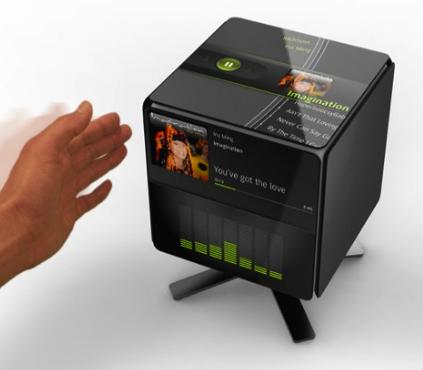
This is not another Chumby in-the-making but this concept gadget provides a 3D interface that can detect distances and movements in 3D space. It also allows touch free gesture control.

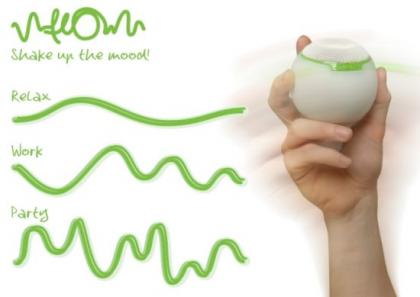
Another gadget developed to be used with Apple iPod comes from British designer David Boyce. Dubbed flOw, the interactive wireless speaker system promotes social behavior by giving users freedom to share their music and take it wherever they want with minimum fuss.
Responding to movement, the flOw allows you to rediscover your music, as you can set the mood by simply shaking one of the speakers, each enclosed in a soft, silicone jacket.
Embedded touchpad mouse on a notebook is a less free and comfortable rather than the detachable mouse. Designer Taewan Kim provided a better solution for this issue by created the Free Mouse that allows users to choose between the embedded and separated mouse. It works wirelessly allows effective control, liberty and flexibility of the computer with minimum fuss.


Television viewing is set to undergo a magical transformation with a new genre of remote device that exemplifies spontaneity and intuitiveness. Dubbed the Gesture Remote Control, the innovative device provides a simple and intelligent interface that can be used to navigate the wide array of content available on modern TVs.

Chuck out your clunky, button-clad remote control. Because the world’s first button-less, gesture-based remote has arrived.


Touchpad maker Synaptics has released an early draft of software it has developed to bring gesture recognition to laptops that don't already provide it.


Well, you can fire up the crazy again, because design studio BCK has got a concept that turns the ‘call me’ gesture into a Bluetooth headset.  The idea is that two rings, one a mic the other a speaker, are worn on the pinky and thumb respectively.  To activate a call you simply separate the two fingers and to end the call place them together.

It’s an intelligent gadget that detects you approaching the toilet, thanks to its built-in PIR sensor. So when you are close, the lights turn on and turn off when you walk away. Remember it only works at night. If the idea is sold to you, you can buy this toilet seat light for $28 at Curiosite.


Movea now enables full body gesture recognition with its recently launched MEMS-based MotionPod solution for low cost, full body motion capture. The solution can be used to enable more realistic avatar motion for gaming or highly accurate biomechanical analysis for sports applications and is now available for B2B customers in the sports and entertainment markets.


Together with its jointly run research partner, the Motion Lab, Movea has developed a MEMS sensor-based, full body motion capture system, enabling a computerized avatar to reproduce a person's body movements in real-time, with an accuracy that matches the efficiency of more expensive video systems.

“By attaching 9 MotionPods on a person’s body limbs, our system can track any movement in 3D to a fine degree of accuracy. We have developed a biomechanical model taking into account human constraints such as the fact that a knee can only bend forward,” explained Bruno Flament, Movea CTO. “This model therefore can reproduce human body motion realistically and accurately.”

In addition to tracking motion in real time, Movea has developed expertise in live gesture recognition. The full body positional information and motion is compared in real-time against a library of full body gestures. For example, in the case of a yoga or martial arts application, it can help guide the user into the correct position.


Emerging consumer electronics applications have prompted Canesta Inc., a manufacturer of smart 3-D sensor chips,  to develop a new version of its 3-D image processing chip based on its CMOS image processing technology for automotive applications. The new chip is intended to add new features to consumer products,